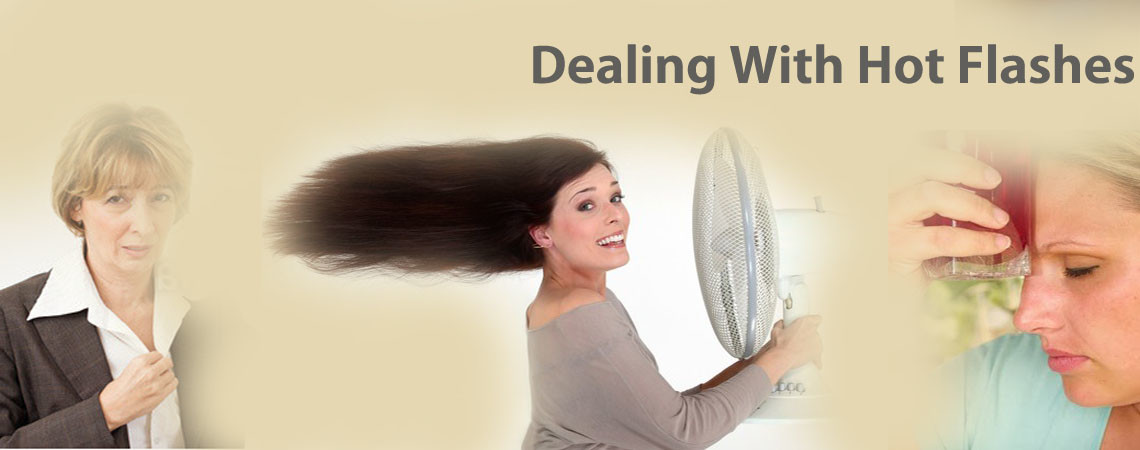
Hot Flashes
Hot flashes are sudden/unexpected feelings of intense warmth, which are usually felt over the face (including the ears), neck and chest; sometimes it feels like your whole body is being Continue Reading →

 Menopause means the permanent cessation or end of menstruation, and the ability to bear children. Menstruation occurs when a woman has not had a period for 12 consecutive months (this means you had your last periods twelve months ago). Women begin to experience signs/symptoms around mid-forties but there have been some women who have started as early as thirty-six years old. Also, some women end up in menopause because of medical conditions or certain medical procedures.
Peri-menopause simply means the time leading up to menopause. This is when you begin to experience various symptoms including skipping/missing periods.
Post- menopause means the time after you are through with all the symptoms of menopause.
Keep it real:
Menopause is not the end of your life; for some women, they look forward to not having to worry about becoming pregnant or having to deal with painful periods. You may experience symptoms that are very uncomfortable but you will get through this experience. Unfortunately, these symptoms will affect not just you, but also your spouse and kids. Some of these symptoms may cause you to react angrily or nervously, or you may become withdrawn/easily agitated. Your spouse/children might not understand nor know how to deal with all these behaviors so they become nervous around you. It is important to talk and bring awareness to family members regarding what you are going through. Husbands are often bewildered or impatient because they do not understand and cannot relate to what you are experiencing. They are mystified at your seeming “up and down” behavior.
So, what are some of the signs/symptoms involved?
Checking it out:
Women are usually talkers; they like to talk about, and talk through stuff. Consequently, we are most likely going to tell someone about how we are feeling. As you talk about what you are going through, you will find that others are, or have been through those experiences. Although you get the support and validation from your friends, you need to visit your gynecologist.. Your gynecologist may order blood work to check the levels of some of your hormones, especially at the beginning phase of menopause.
Hormone levels:
Some gynecologist might not order blood work as the signs and symptoms, including the age factor may be proof enough that you are beginning to experience menopause. If they do order blood work, they might order three of these hormones: estrogen, FSH, and LH. Estrogen levels decrease during menopause and this helps to cause physical (e.g., vaginal dryness) as well as emotional changes (e.g., mood swings); that is why you experience mood changes/swings. FSH (Follicle Stimulating Hormone) and LH (Luteinizing Hormone) become elevated during menopause. These tests alone do not determine if you are menopausal as they might be off for other reasons; that is why they have to look at them in conjunction with your symptoms.
Treatments:
May include hormone therapy, antidepressants, anti-anxiety tablets, vaginal creams, and lubricants. Some people take over-the-counter medications that may include soybean products, Vitamin E, and herbal items like black cohosh and evening primrose; there has been no real scientific proof of their effectiveness but many women have been able to report relief from many of these symptoms. There are many herbal products that are being used to decrease or alleviate several of these symptoms. It is important to see your doctor before you go on any of these over the over-the-counter medications.
To the spouse:
Take a step back and take a deep breath before you say anything that you’ll probably regret later. Remember, a man’s body was never designed to bear children so you have never experienced the upheavals of menstrual cycles, pregnancy and now, menopause (absence of periods and loss of ability to bear children). Hang in there; be patient; it is going to get better but it will take some time. You just have to be supportive and understand that she does not need criticism; she needs love and support. Think about the range of emotions and the changes that she is experiencing; it is not a pleasant feeling and it is not easy. Ask her to share with you how she is feeling. Read or research about the signs and symptoms that are a part of menopause. Talk to an older male that you feel is a good, kind family person. I caution you to be careful though; you don’t want to discuss your wife with a talker or a brash, inconsiderate male although he may be your friend. Explore ways of helping her cope and provide recreational activities to help her relax (take her out to breakfasts/dinners, weekend trips, movies, concerts/plays, couples retreat, share a hobby, write love notes, send flowers, massages). The effort you invest in your relationship will pay off later as she will be eternally grateful.